
Native American Folk Art Hand Beaded Whimsy Change Purse/ Boot Niagara falls
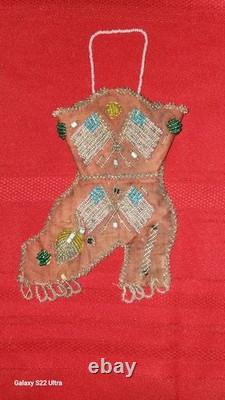
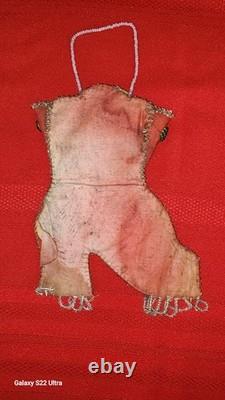

Native American bead workers in northeastern United States, primarily in upstate New York, and southeastern Canada. The ones I acquired were all made between 1880 and 1920. But beadwork by Iroquois people has a long history.
The Iroquois Confederacy is made up of six nations - the Mohawk, Seneca, Tuscarora, Oneida, Cayuga and Onondaga. It was created long before the American Revolution and continues today. Before the arrival of Europeans to the new world, native people were skilled in moosehair embroidery on birch bark. Mission schools, established on the reservations, taught sewing and embroidery skills as early as the 18th century.
By the middle of the 18th century the British were actively seeking "Indian curios", and the Iroquois started making items to sell in order to help support their families. European fashion and trends in decoration influenced the Iroquois to adapt their ancient beading skills, their glass beads, and their tribal themes to Victorian preferences and tastes. They began to make items - pincushions, picture frames, match holders, boxes, purses and trinkets to sell at or near Niagara Falls, and at other sites near their communities, at state fairs, train stations and public events.
This became an important source of income for Iroquois familie. In general, Iroquois beadwork fall into the following categories: pin cushions, picture frames, purses, boxes, birds, strawberries, boots and other trinkets, and commemoritive items with place names or phrases. This is a fairly common form.
It was very popular in the late 1800s in crafts of all types. The Iroquois adapted it to their beadwork, producing boot pincushions, boots with a pouch at the top, and boots with place names or phrases on them. They made both left and right facing boots.